Engineering and digital systems
Mechatronics, AI, federated learning, cloud technology, IoT and drones form a connected technical base.
 POLYMATH NEXUSCONSULTANCYRegister
The work behind the polymath profile
Simultaneous Integrative Socio-Technological Polymath
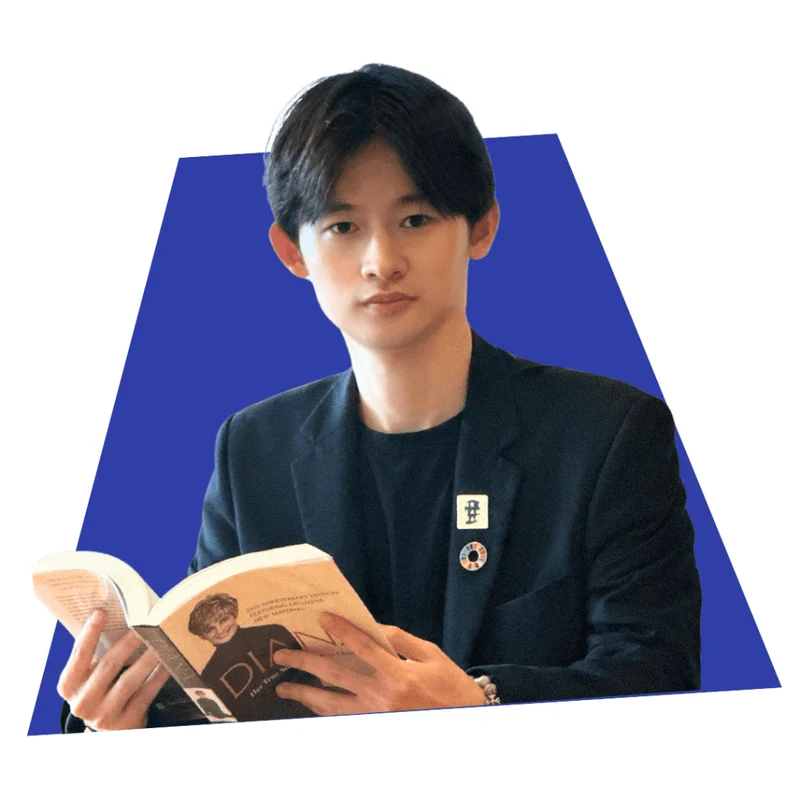
Liam’s portfolio connects mechatronics and AI projects with governance, environmental sustainability, accessibility and youth development. The strongest examples pair a technical method with a specific human or environmental use, rather than treating technology and social purpose as separate lists.
Why this type fits
The portfolio supports a developing integrative polymathy case: technical creation is connected to governance, social action and youth learning. Technical depth is the strongest independently documented strand. The assessment does not treat every award, leadership affiliation or environmental application as a separate mastered discipline.
We use three lenses: breadth considers the variety of substantive work; depth looks for sustained knowledge, responsibility and outputs; synthesis looks for a useful connection between fields. These lenses draw on research by Michael Araki. They are used here for a portfolio analysis, not a psychometric test or professional accreditation. The complete record below retains every numbered point from the member’s professional profile. Some points support more than one lens; related roles, awards and records are not counted as separate disciplines. Source labels distinguish linked records, supplied professional information and proposals. A point’s inclusion does not imply equal expertise in every area. The descriptions used by this symposium distinguish a supported polymathy case from specialist-led interdisciplinary practice. The explanations are editorial interpretations of the visible record, not independent certifications. No IQ score, personality inference or AI-generated ranking is used as proof.
Research behind the framework ↓01 · Breadth
Mechatronics, AI, federated learning, cloud technology, IoT and drones form a connected technical base.
Ethical frameworks, sustainability, accessibility, climate engagement, youth programmes and leadership extend the applications beyond technical performance.
02 · Depth
The degree and university project records support technical training and application.
Intel, Huawei and hackathon records concern particular technical contributions; Diana and QECT recognition concern social action and leadership.
03 · Synthesis
Wildfire detection and assistance tools connect methods in engineering to specific social or environmental needs.
AI-governance work links knowledge of engineered systems with ethical and rights-related considerations.
The organisation, mentorship and youth roles connect technical projects with participation and learning.
04 · Pattern over time
Overlapping socio-technical roles within a developing career
The dated record combines an earlier engineering and competition phase with later social-action, governance and youth-leadership responsibilities. The 2026 profile describes concurrent technical, advisory and community roles, while older project awards should not automatically be read as evidence that the same projects are still operating.
Simultaneous / concurrent: substantive activity in more than one field during an overlapping period.
Serial / sequential: substantial work in different fields across successive phases of a career.
These are working descriptions of timing, not a hierarchy of “proper” and lesser polymaths. Both patterns can involve breadth, depth and synthesis. A role list without dates cannot establish overlap by itself.
Diana Award recognition records technology-related social action.
Mensa Johor leadership adds a dated organisational role alongside the wider professional portfolio.
05 · Complete profile map
The numbering follows the professional profile. Open a point to read the original account, its sources and the interpretation used here.
15 of 15 profile points shown
AI engineering Society professional profile cited below
Malaysian Mensa describes Liam as an AI engineer focused on AI governance and capacity building. His work applies technical knowledge to social needs while considering how AI can be developed and governed responsibly.
The engineering role establishes the main technical strand; the projects below provide the more concrete output evidence.
AI governance · ethics Board/research contribution recorded in profile
As a Board Member and robotics and automation domain researcher for the Global Youth AI Advisory Body, he has contributed to work on rights-respecting AI governance and ethical framework design. A 2026 public profile records his contribution to a multinational report prepared for the India AI Impact Summit and the UN Global Dialogue on AI Governance.
Governance work brings technical understanding into questions of rights, responsibility and institutional use. Report participation is a contribution, rather than sole authorship of a global framework.
Technology · sustainability Award record and profile
His social innovation work uses AI, Internet of Things and drone technology to address environmental and humanitarian challenges. The Diana Award records his focus on environmental sustainability and accessibility.
The use of AI, IoT and drones connects technical methods with environmental and humanitarian problems.
AI · environmental monitoring UTAR project record cited below
At UTAR, he developed Fire Monitoring and Detection Using Federated Learning Approach, a system designed to identify warning signs before a wildfire becomes fully established. The project won first place in Malaysia’s 2022 Intel Building Digital Readiness AI Impact Creator category.
The federated-learning wildfire project is a specific example of technical synthesis around an environmental use case. A design goal is distinct from verified operational deployment.
Engineering · accessibility UTAR project record described in profile
His technical projects have included assistance tools for people with visual impairment. UTAR’s student award record describes a project developed to support blind and visually impaired people during the COVID-19 pandemic.
Assistance tools connect engineering design with the needs of people with visual impairment.
Social organisation · technology Diana Award/profile account
The Diana Award identifies Liam as founder of the Global Sustainability Organisation, which collaborates with young leaders across ASEAN to develop technology solutions for non-governmental organisations.
The organisation connects young technical contributors with NGO needs and collaborative delivery.
Mentorship · STEAM learning 2026 event/profile account
Through mentoring, judging and technical guidance, Liam has helped young people develop skills and complete technology projects. A 2026 Asia-Pacific Youth Summit profile reports that he has mentored more than 1,300 youths.
Mentoring and technical guidance transfer knowledge to others. The reported participation count is attributed to the cited profile, rather than an independently audited learning outcome.
Social action · leadership 2026 recognition recorded in profile
He was selected as a Queen Elizabeth II Commonwealth Trust 100 Young Leader in 2026 for his contributions to technology, sustainability and youth empowerment across the Commonwealth.
The QECT selection recognises a defined body of leadership and social-action work; it is not an additional academic field.
Social action recognition Diana Award Roll of Honour
Liam was the sole Malaysian recipient of the 2024 Diana Award. The award’s Roll of Honour recognises his social action through technology for sustainability and accessibility.
The award is external recognition of social action through technology and related causes.
Applied AI recognition UTAR/Intel project record
UTAR records him as Malaysia’s Country Award Winner at the 2022 Intel AI Global Impact Festival in the AI Impact Creators category for students aged 18 and above.
This is further evidence for the technical strand associated with the 2022 project, rather than a second unrelated discipline.
Cloud technology · teamwork University competition record described in profile
He was part of UTAR’s national champion team in the Huawei ICT Competition Cloud Track. The team later won Third Prize in the global final held in Shenzhen, China, in 2023.
The competition result supports applied technical capability and collaborative problem-solving.
Engineering · sustainable development Team award described in profile
His team received the Technical Innovation Team Award during the Tsinghua Global Summer School SDG Hackathon, recognising a technically strong response to sustainable development challenges.
The hackathon combines technical development with a sustainable-development brief; the recognition belongs to a team.
Climate · youth participation Roles recorded in professional profile
Malaysian Mensa lists him as a COP30 Youth Delegate, a Max Thabiso Edkins Youth Ambassador supported by the World Bank Group, and the Local Ambassador for the beVisioneers Fellowship Singapore Hub.
The engagements carry technical and sustainability perspectives into international youth settings. Titles alone do not establish policy adoption.
Community leadership Society listing cited below
As Johor Branch Chairman of the Malaysian Mensa Society for 2026/2027, he works to bring more young people into the Mensa community and encourage purposeful use of their abilities.
Branch leadership adds an organisational and community-building responsibility.
Mechatronics · engineering University qualification recorded in profile
He graduated from Universiti Tunku Abdul Rahman in 2023 with a Bachelor of Engineering (Honours) in Mechatronics Engineering. His university record reflects work across AI, cloud technology, engineering innovation and applied social impact.
The degree is the formal engineering anchor. AI and cloud projects extend that foundation into applied technical work.
06 · Assessment conclusion
Reviewed against the same three criteria, with timing considered separately. This is an editorial assessment of the available portfolio, not independent accreditation.
Description supported by the record
Concurrent engineering, AI governance, sustainability and youth-learning work
The strongest positive case is a Simultaneous Integrative Socio-Technological Polymath. Liam’s portfolio links mechatronics and AI engineering with governance, environmental and accessibility challenges, youth education and social organisation. The record includes a university-documented wildfire-detection project, accessible-technology work, contributions to AI-governance frameworks, a youth sustainability organisation and extensive mentorship. His strongest technical depth is complemented by growing policy and community practice. Current roles across technology, governance and youth work support a concurrent classification; earlier awards are treated as milestones, not proof that every project remains active.
Range of breadth
The portfolio spans mechatronics and AI engineering; AI governance and ethical-framework contributions; technology for environmental sustainability and accessibility; and youth learning, mentorship and community organisation. These strands cross technical, policy and educational/social-action contexts. Sustainability and accessibility are significant problem settings, while the claim rests on documented engineering and governance contributions—not on assuming separate mastery of ecology, medicine or disability studies.
Level of depth
A mechatronics engineering degree, university-documented wildfire-detection project and technology competition results establish a strong applied technical base. Governance-report contributions, founding and organising sustainability work, recognition for social action and a profile-reported record of mentoring more than 1,300 youths extend the case beyond engineering credentials. These records support meaningful contribution across strands while leaving legal, policy and education specialist depth claims appropriately bounded.
Capacity for synthesis
The wildfire project applies AI to disaster detection; accessible-technology projects connect engineering to user needs; AI-governance work considers rights and responsible deployment; and mentorship turns technical experience into learning opportunities. These are direct examples of technical methods being shaped by social problems and then carried into governance and capacity-building. The integration is central to the socio-technological description.
Simultaneous or serial?
The profile describes current AI-engineering, AI-governance, sustainability and youth-leadership responsibilities, including 2026 appointments and activities. The technical project and competition milestones in 2022–2023 precede later recognition and roles, but the available current profile supports ongoing overlap between technical, advisory and community strands. This supports a simultaneous classification without claiming that every past project is still active.
Use Simultaneous Integrative Socio-Technological Polymath. The record supports a strong integrative case across technical creation, governance and social action, with engineering and AI as the clearest depth anchor. Do not convert awards into proof of equal expertise in law, international policy or education, or treat environmental problem contexts as separate qualifications.
The assessment refers to the numbered profile points above and their source records. A proposal, an affiliation or an award is interpreted only for what it establishes. “Proper” denotes meeting breadth, depth and synthesis in this seminar’s terminology; it is not a synonym for simultaneous work.
Read the common criteria, timeline definitions and assessment method ↗07 · Follow the evidence
The full professional profile is the source inventory for this page. Its underlying records should be consulted for the scope, dates and status of individual claims. Selected external starting points are listed below.
The professional profile does not carry a separate bibliography. Individual linked records and the selected external starting points above identify what can be checked; other entries remain attributed to the supplied profile.
Araki’s work provides the breadth–depth–integration framework. We use synthesis to make the integration lens easier to read. The timing descriptions above explain how a portfolio develops; they do not assign a validated “type score” to the member.